

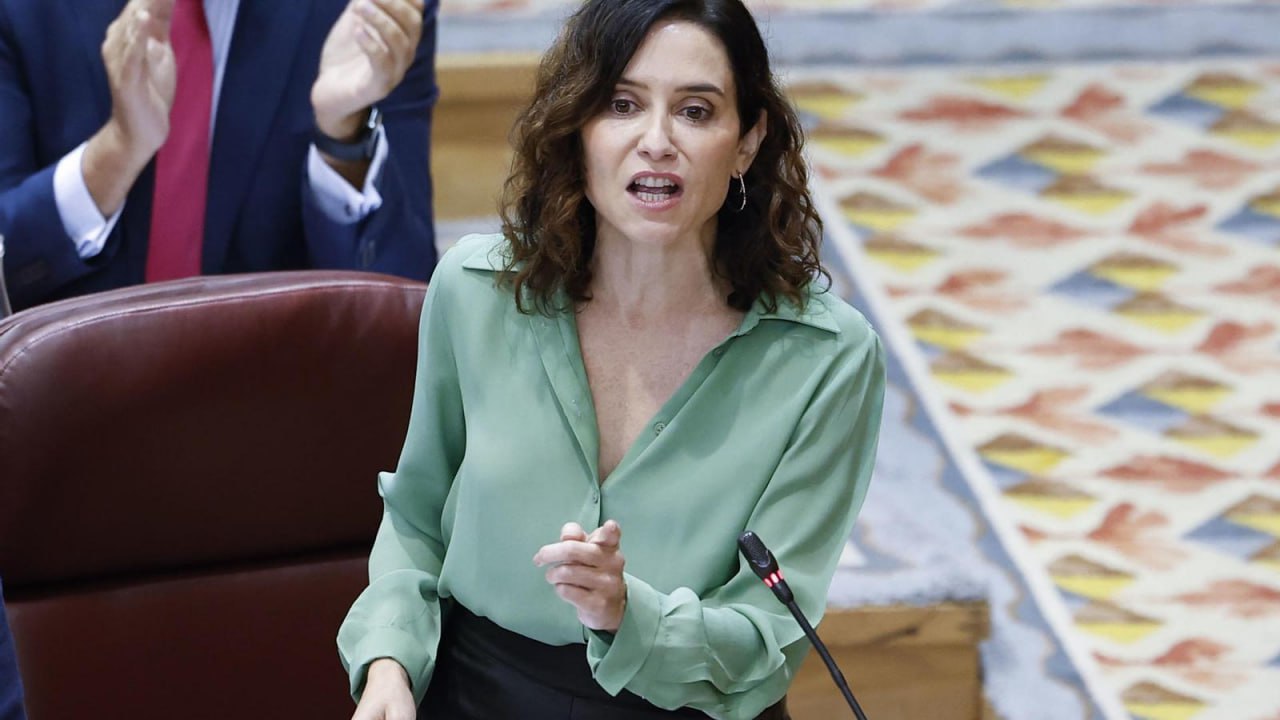
In recent weeks, Madrid’s regional president Isabel Díaz Ayuso has once again found herself at the center of national attention. What began as a wave of criticism in Spanish media has escalated into one of the most intense political storms of her career. Headlines across the country echo with dramatic claims, and social networks have amplified every detail — real, exaggerated, or entirely speculative.
While no official wrongdoing has been confirmed, the accusations circulating in public debate have placed Ayuso under unprecedented scrutiny, raising questions about how long she can withstand the pressure.
A Political Figure Always in the Spotlight
Ayuso has long been one of Spain’s most polarizing leaders — celebrated by her supporters as a defender of economic openness and criticized by her opponents for her confrontational style. Her ability to turn controversies into political strength has, until now, been one of her notable traits.
But this time, the media response has been far more intense than usual. Analysts suggest that the “accusations” dominating headlines reflect less about proven facts and more about the highly polarized environment in which Spanish politics currently operates.
“Me da vergüenza lo que hice”: A Quote That Sparked a Storm
A phrase attributed to Ayuso — “Me da vergüenza lo que hice” — has circulated widely across social media.
Though taken out of context from a broader conversation about political responsibility and past decision-making, the line triggered speculation and commentary from pundits and political rivals.
Critics have used it as evidence of moral failure, while supporters argue it reflects her willingness to acknowledge mistakes — a rare trait in politics.
Whatever the interpretation, the phrase became a viral moment, accelerating the public debate surrounding her political future.
Political Pressure or Career Turning Point?
Despite the dramatic headlines claiming that her “career is coming to an end,” the situation remains ambiguous:
- No official charges or verified accusations have been filed.
- The controversy exists mainly within media narratives and opposition framing.
- Ayuso continues to maintain strong support within her party and among her voter base.
Experts note that Spanish political history is full of leaders who survived similar moments — and also leaders whose reputations never fully recovered.
What happens next depends largely on how Ayuso manages public communication, internal party dynamics, and the shifting political climate.
What This Moment Means for Spanish Politics
Whether the current wave of controversy will become a turning point or simply another chapter in Ayuso’s turbulent political career remains to be seen. What is clear is that:
- The political landscape is increasingly driven by media cycles,
- Public perception can change rapidly,
- And every phrase, interview, or leaked comment holds the power to reshape national debate.
Ayuso now faces one of the greatest challenges of her leadership: regaining control of the narrative.

